
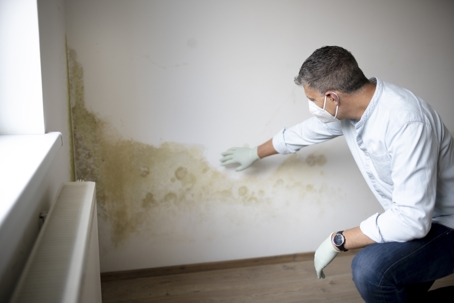
You notice a dark patch on a bathroom ceiling, a line of spotting along a baseboard, or a musty smell that will not go away. A quick search for help pulls up phrases like “mold remediation” and “mold removal,” and suddenly you are looking at options that sound expensive and confusing. One contractor says they can “kill the mold” in a day, another talks about tearing out walls.
For Santa Clarita homeowners, this is a stressful spot to be in. You want to protect your family’s health and your home’s value, but you do not want to pay for work you do not need, or ignore a problem that quietly gets worse behind the walls. Understanding the real difference between remediation and removal is the key to making a smart decision instead of guessing.
At Mailman Environmental, we have completed more than 3,000 inspections across Santa Clarita and the Greater Los Angeles Area. Our team is certified by the California Department of Public Health and the Department of Occupational Safety and Health, and we focus on objective mold testing and tailored plans, not selling cleanup work. In this guide, we will break down mold remediation vs. removal for Santa Clarita homes and show how proper testing points you toward the right level of response.
Why "Mold Remediation vs. Removal" Matters For Santa Clarita Homes
Most homeowners only learn the words “remediation” and “removal” when a problem has already surfaced. A home inspector flags suspected mold, a tenant complains about a musty odor, or a plumbing leak is finally discovered behind a kitchen cabinet. Once quotes start coming in, the language shifts, and it becomes hard to tell whether two companies are offering the same thing or completely different scopes of work.
This distinction matters because the choice between mold remediation and mold removal affects how much of your home gets opened up, how long your household is disrupted, and how likely the mold is to return. A quote that focuses only on spraying and wiping may leave hidden contamination behind. A quote that leans heavily on demolition might include tearing out materials that could have been safely cleaned, driving costs and build back time higher than necessary.
In Santa Clarita, the way homes are built and the local climate add another layer. Many houses have stucco exteriors over framed walls, attics that can run hot and underventilated, and slab foundations where plumbing leaks can travel sideways before anyone sees a stain. Even in a generally dry climate, bathrooms without good ventilation, minor roof leaks during winter storms, and appliance failures can create pockets of moisture where mold thrives. These conditions make it especially important to base the remediation vs. removal decision on a clear understanding of what is actually wet and contaminated, not just what you can see.
Because Mailman Environmental has inspected thousands of homes in Santa Clarita and nearby communities, we see patterns repeat. Some homeowners are told to gut rooms when targeted remediation would be enough. Others are sold quick “treatments” that ignore soaked drywall or insulation. Our goal is to give you the information you need so you can recognize the difference and choose an approach that fits your specific home.
What Mold Removal Involves And When It Becomes Necessary
Mold removal is exactly what it sounds like, physically removing and discarding building materials that are too contaminated to clean. In some situations, especially after long-term leaks or flooding, mold grows not just on the surface but into porous materials such as drywall, particleboard, insulation, carpet, and some types of underlayment. Once growth has penetrated deeply, cleaning the surface is no longer enough because mold structures can remain inside the material.
Inside your walls and floors, moisture often travels farther than you expect. Water from a slow plumbing leak can wick up drywall several feet above the visible damage or spread sideways along baseplates. In these cases, removal typically includes cutting out sections of drywall, pulling out wet insulation, and possibly removing damp or damaged flooring. All of this is usually done within containment, with plastic barriers and negative air machines to keep disturbed spores from spreading into the rest of the home.
Removal is common when mold has been present for a long period, when materials stayed wet for days or weeks, or when porous materials show extensive staining and softness. It is also often appropriate for materials with heavy mold growth in areas that are hard to clean effectively, such as the back side of drywall or saturated carpet padding. A properly planned removal project will extend slightly beyond the visibly affected area, based on moisture readings and inspection findings, to capture hidden contamination.
In many Santa Clarita homes, especially those built before certain years, another consideration comes into play. Older joint compound, ceiling textures, floor tiles, or painted surfaces may contain asbestos or lead. When removal involves cutting, sanding, or demolishing these materials, they must be evaluated ahead of time so workers and occupants are not exposed to additional hazards. This is where pairing mold assessments with asbestos and lead paint surveys becomes critical.
Our team at Mailman Environmental performs asbestos and lead paint surveys in addition to mold inspections. This allows us to flag any materials that require special handling before a contractor starts cutting out mold-damaged sections. We follow California Department of Public Health and Department of Occupational Safety and Health standards, so when we recommend removal as part of a remediation plan, it is based on both contamination and safety considerations, not just how something looks on the surface.
How Professional Mold Testing Guides The Right Choice
Without proper inspection and testing, the scope of a mold problem is mostly guesswork. Contractors may rely only on what they can see, which often leads to either missing hidden growth or assuming the worst behind every wall. A professional mold inspection and testing process replaces that guesswork with data about where moisture is, how far mold has spread, and how much it is affecting the air you breathe.
During an inspection, we start with a detailed walkthrough of your Santa Clarita home, noting any visible mold, staining, or water damage. We ask about the history of leaks, ventilation issues, and prior repairs. Moisture meters and thermal cameras can help identify damp areas inside walls, under flooring, or in ceilings that do not yet show obvious damage. When conditions warrant it, we collect surface samples from suspect growth and air samples from key rooms and sometimes outdoors for comparison.
Lab analysis of these samples can reveal what types of mold are present and at what levels. Elevated spore counts in living areas, compared to outdoor air, may indicate hidden reservoirs behind walls or under floors even when surfaces look clean. Surface samples can distinguish between staining from past events and active growth. Together with moisture readings, this information guides decisions about where simple remediation steps are enough and where more extensive removal is warranted.
Avoiding Costly Mistakes With Mold Quotes And DIY Fixes
Faced with mold, many homeowners either overreact or underreact. Overreaction can mean gutting entire rooms when the problem is small and contained. Underreaction can mean wiping visible spots and painting over them while moisture and hidden growth continue unchecked. Both paths can be costly, either in immediate dollars or in long-term damage and health concerns.
One red flag is any quote that focuses solely on “killing” mold with fogging or a single chemical treatment, without mentioning containment, HEPA filtration, or moisture correction. Fogging alone may knock down airborne spores temporarily, but it does not remove growth rooted inside wet drywall or carpet. Spraying bleach on a surface without addressing what made it wet is unlikely to prevent mold from coming back once the surface dries and then gets damp again.
Another concern is skipping independent inspection and relying only on a remediation contractor’s brief walkthrough. Some contractors do an excellent job of assessing conditions, but they are also in the business of selling a service. Without baseline moisture readings, clear documentation of affected areas, or any lab data when it is needed, you may have no way to tell whether their proposed scope matches the real problem. That can lead to bids that are far larger or smaller than appropriate.
There is also the temptation to handle everything as a do-it-yourself project. For very small areas of mold on non-porous surfaces, such as a bit of mildew on shower grout, careful cleaning and better ventilation may be reasonable. However, once growth covers more than a limited patch, involves porous materials, or is associated with a leak inside a wall or ceiling, the risks go up quickly. Disturbing moldy materials without proper containment and protective measures can spread spores throughout your home and increase exposure.
Our inspection reports at Mailman Environmental are designed to help you avoid these traps. By spelling out where moisture is present, what types of materials are affected, and where testing shows elevated mold activity, we give you a technical foundation for conversations with contractors. You can ask specific questions, such as why a company proposes removal in one area but not another, or how they plan to prevent cross-contamination, and compare those answers against a clear, documented plan instead of vague impressions.
Next Steps To Protect Your Santa Clarita Home
Once you understand the difference between remediation and removal, the next question is how to apply that knowledge to your own home. The most reliable path is straightforward. First, document the problem with a thorough inspection and, when indicated, testing. Second, use those findings to create a clear remediation plan that spells out where containment, cleaning, moisture correction, and any necessary removal fit together. Third, select a qualified contractor to carry out that plan, and finally, verify that the work achieved a healthy indoor environment.
Starting with Mailman Environmental keeps the focus on accurate information instead of guesswork. Our certified team evaluates mold, moisture, and related hazards like asbestos and lead paint across Santa Clarita and Greater Los Angeles, then translates what we find into practical recommendations you can act on. We also connect clients with a network of trusted contractors who can follow the plan, so you are not left trying to interpret technical findings on your own or hoping that a quick fix will hold.
If you have discovered mold in your Santa Clarita home, or you are sorting through confusing remediation and removal quotes, a clear, objective assessment is the best first step. Reach out to schedule a mold inspection and testing, and move forward with a plan that fits your home, your health concerns, and your budget.